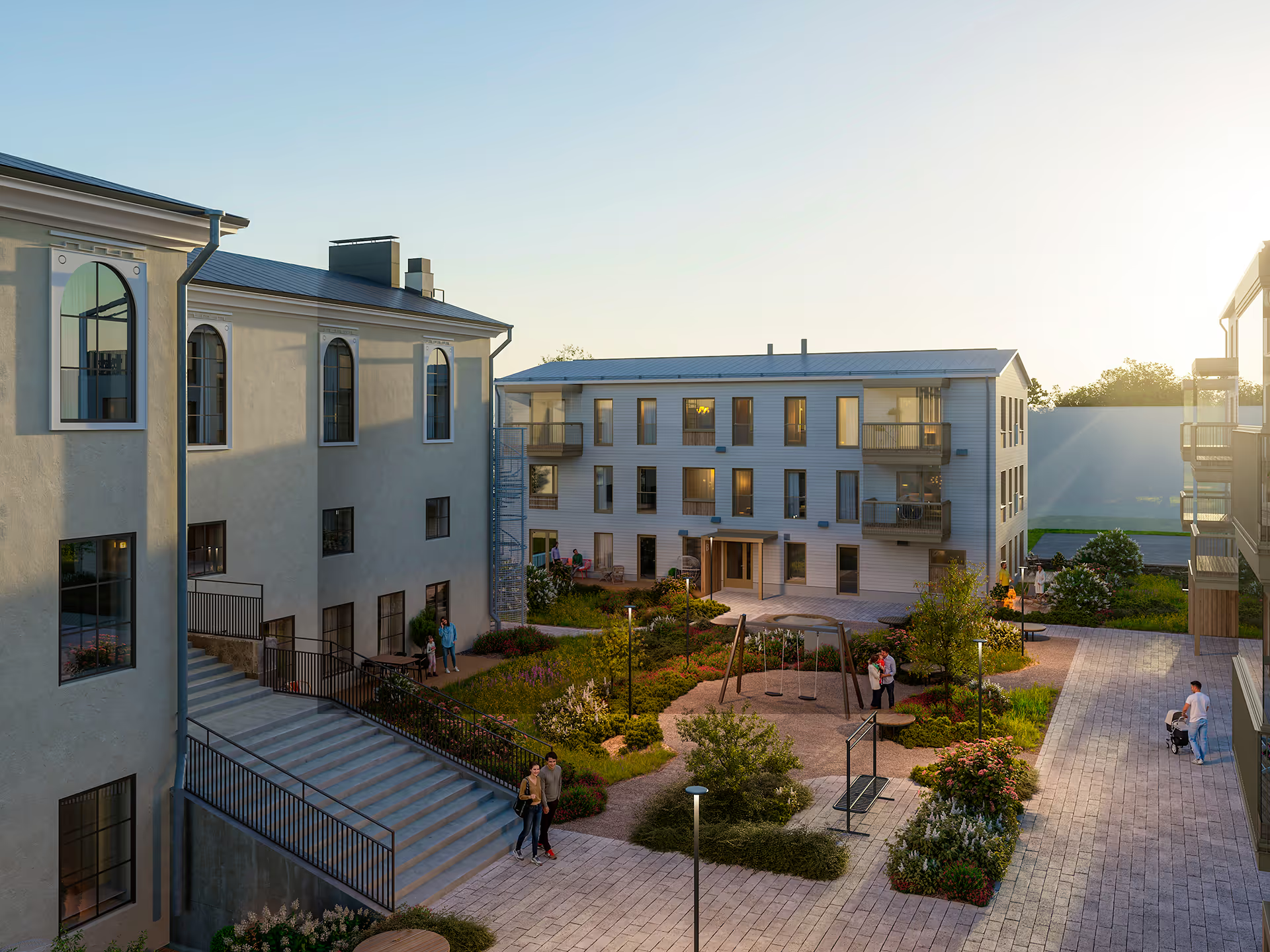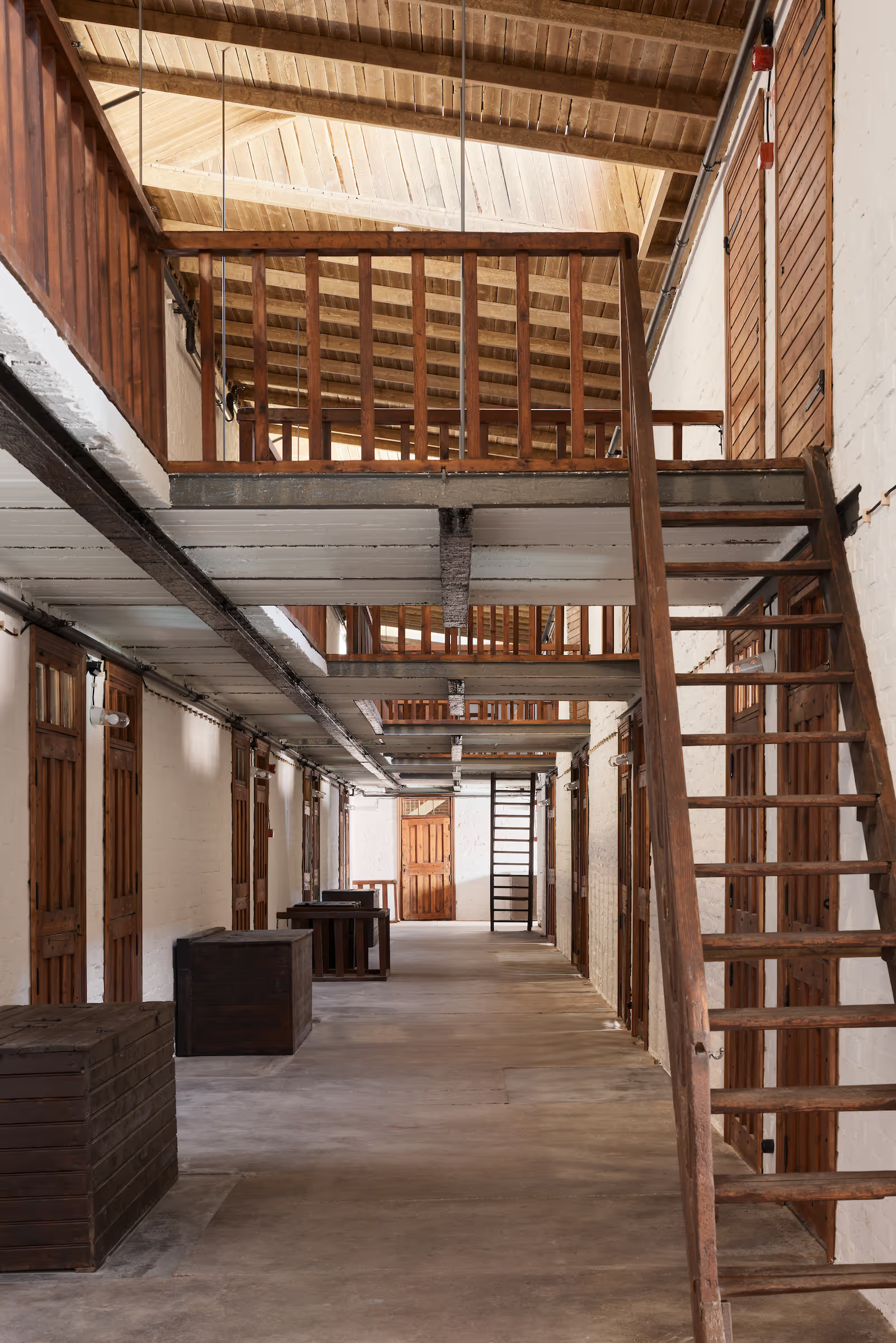
Avarrus designed five new apartments within a historic building on the edge of Tähtitorninmäki, originally designed by K.A. Wrede and completed in 1900 and 1906. The property forms part of the Finnish Mission Society’s former residential, office, and church complex. The new apartments continue the building’s gradual transformation, following the completion of 26 apartments designed by Avarrus in 2020 within former office premises.
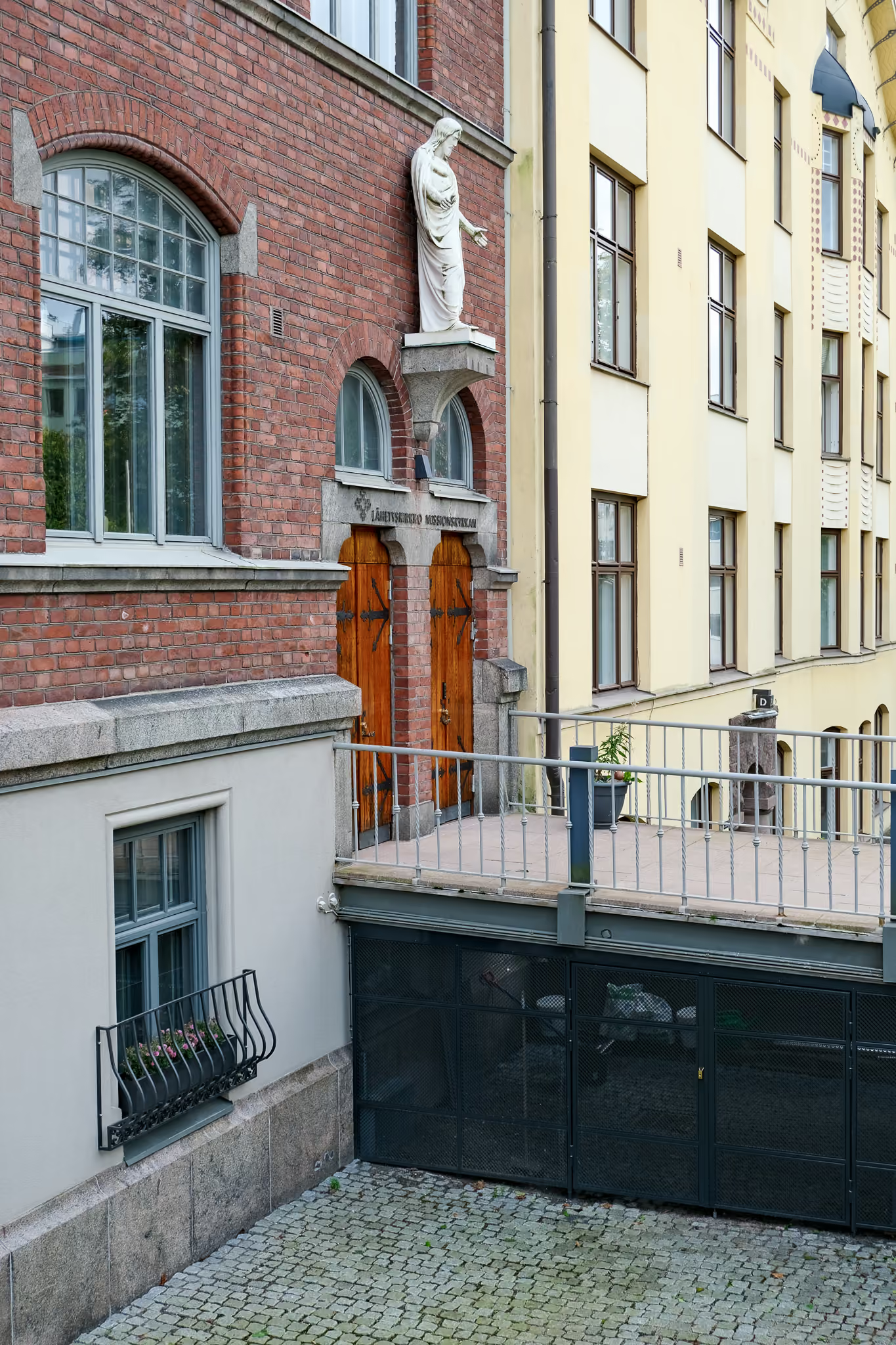
Soon after the completion of the apartments at Tähtitorninkatu 16, design work began to convert the former office spaces of the Finnish Mission Society at Tähtitorninkatu 18 into five new homes. What makes this four-storey section of the building particularly unique is the protected church hall located at its centre, which remains in active use. Constructing apartments above and below the hall presented significant challenges, as building services and acoustic improvements had to be implemented entirely within the apartments without altering the church space itself. The hall's grand pipe organ posed additional acoustic challenges, requiring extensive sound measurements throughout the design process.
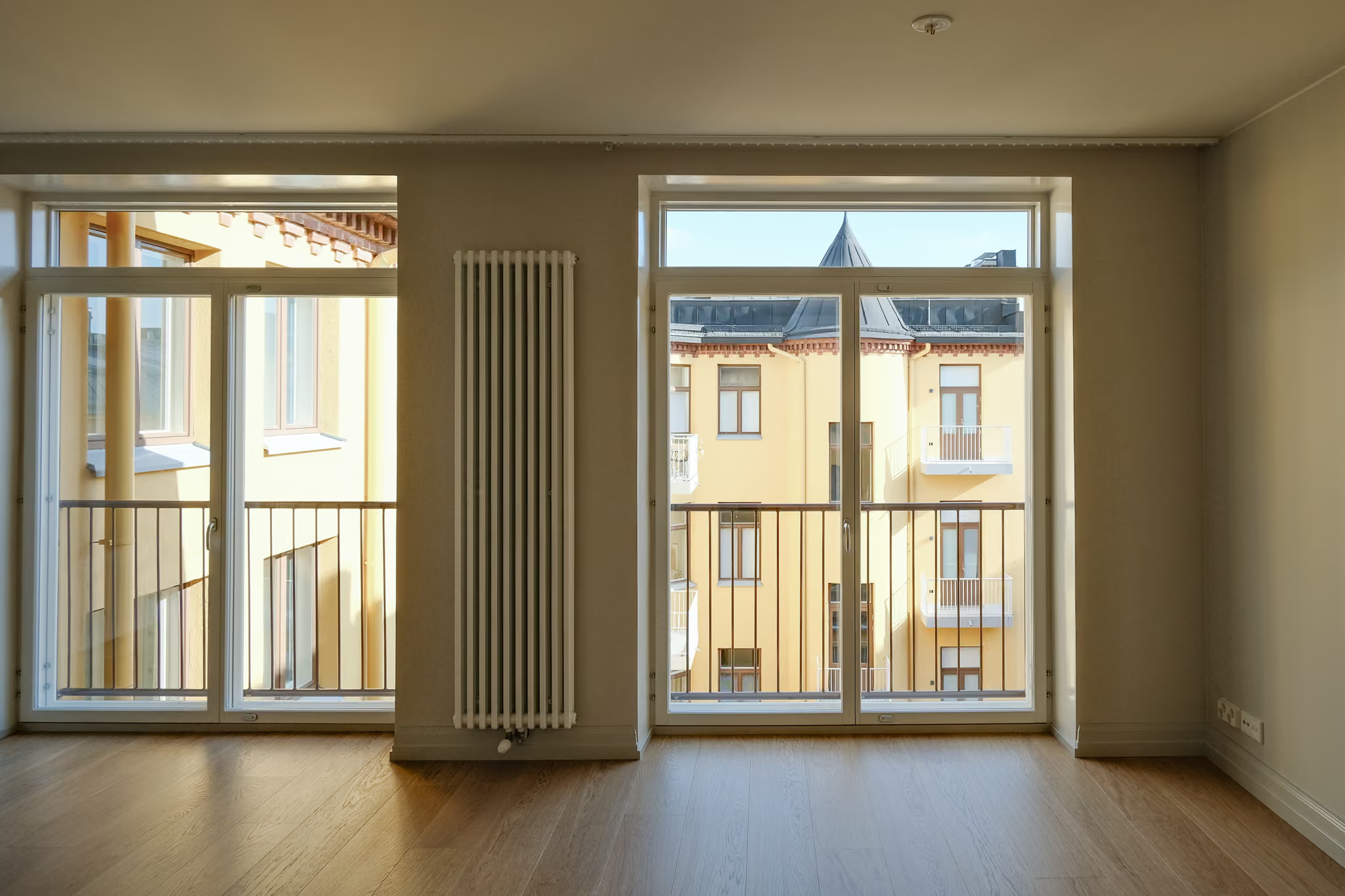
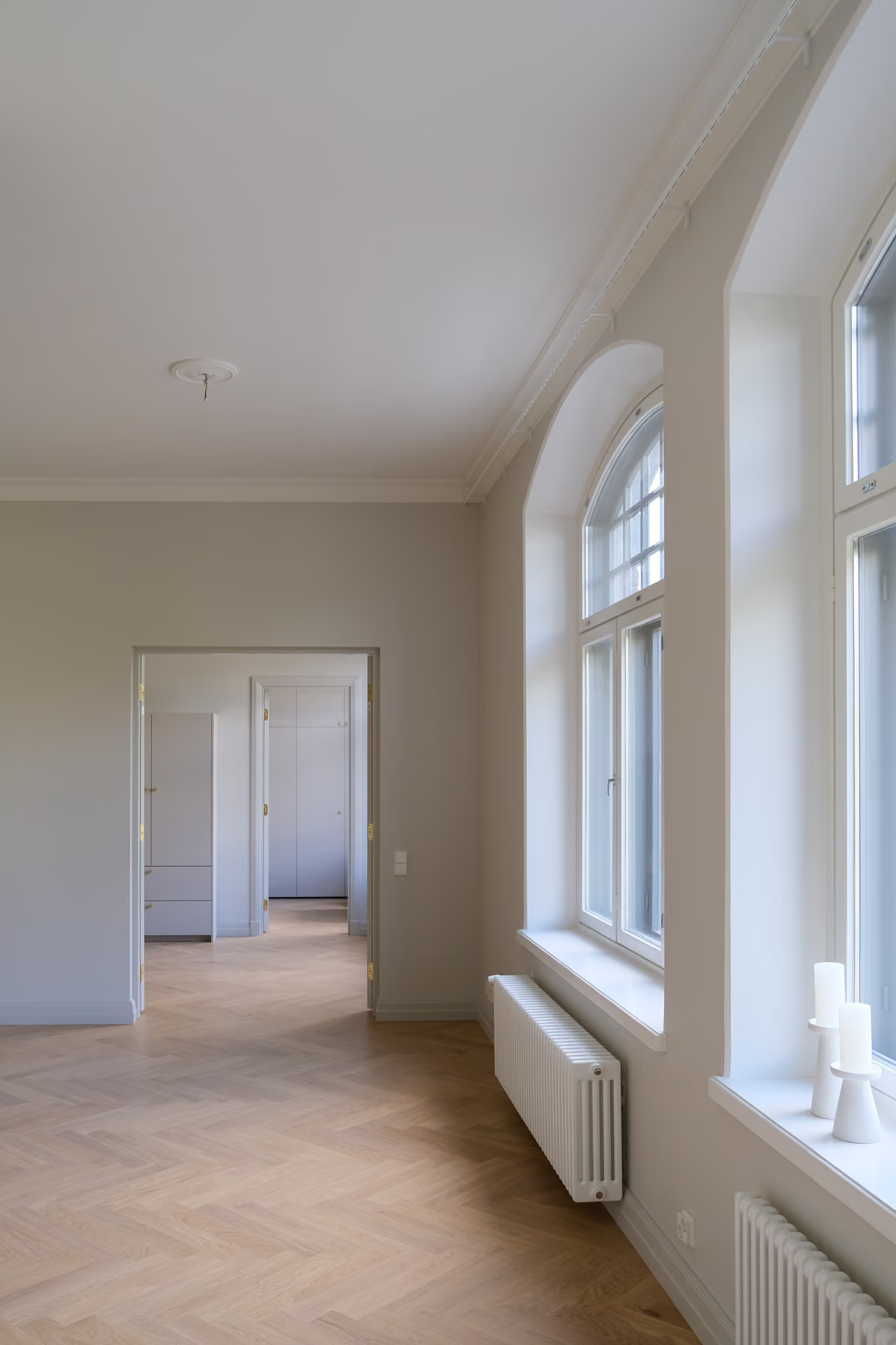
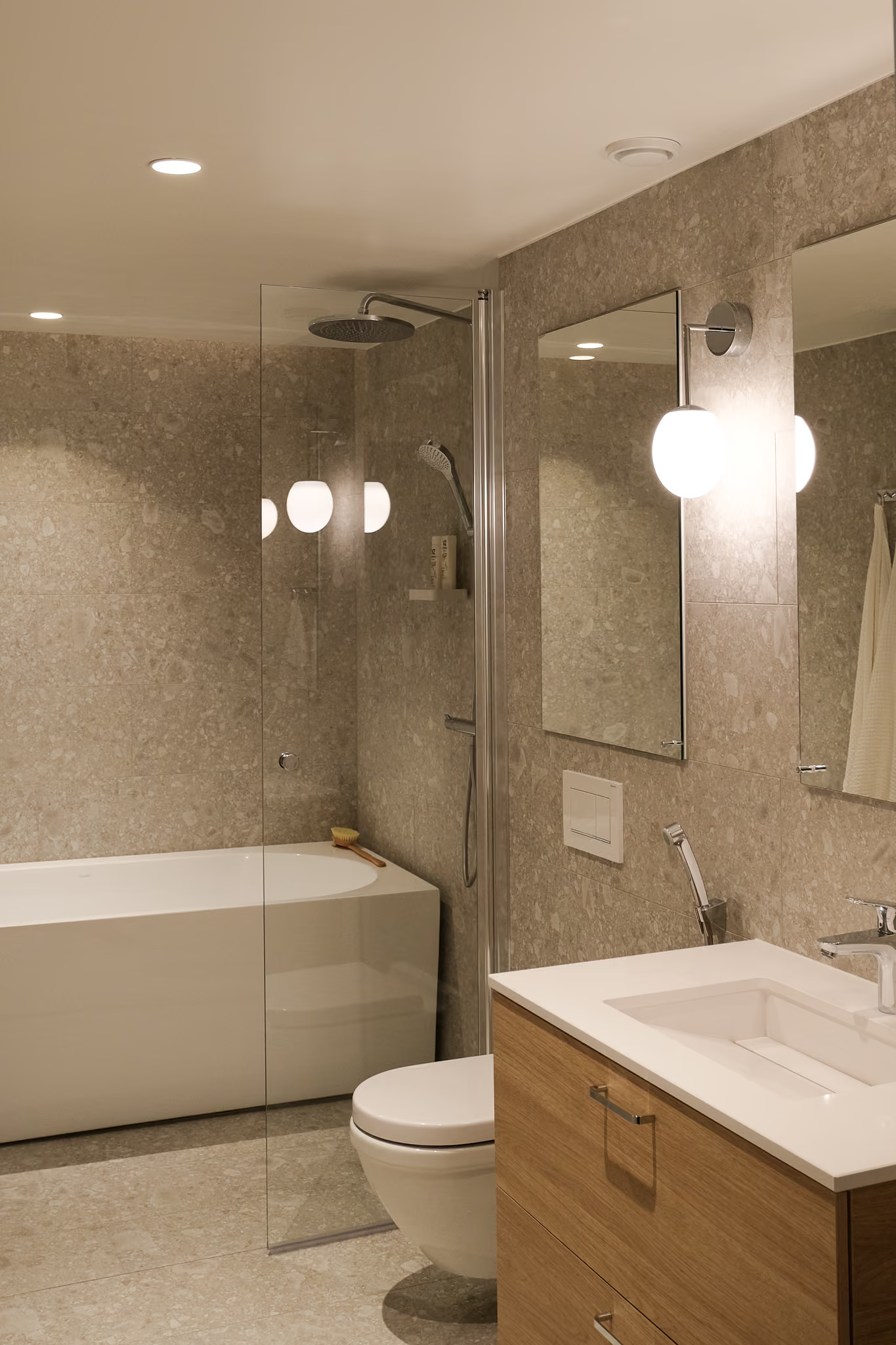
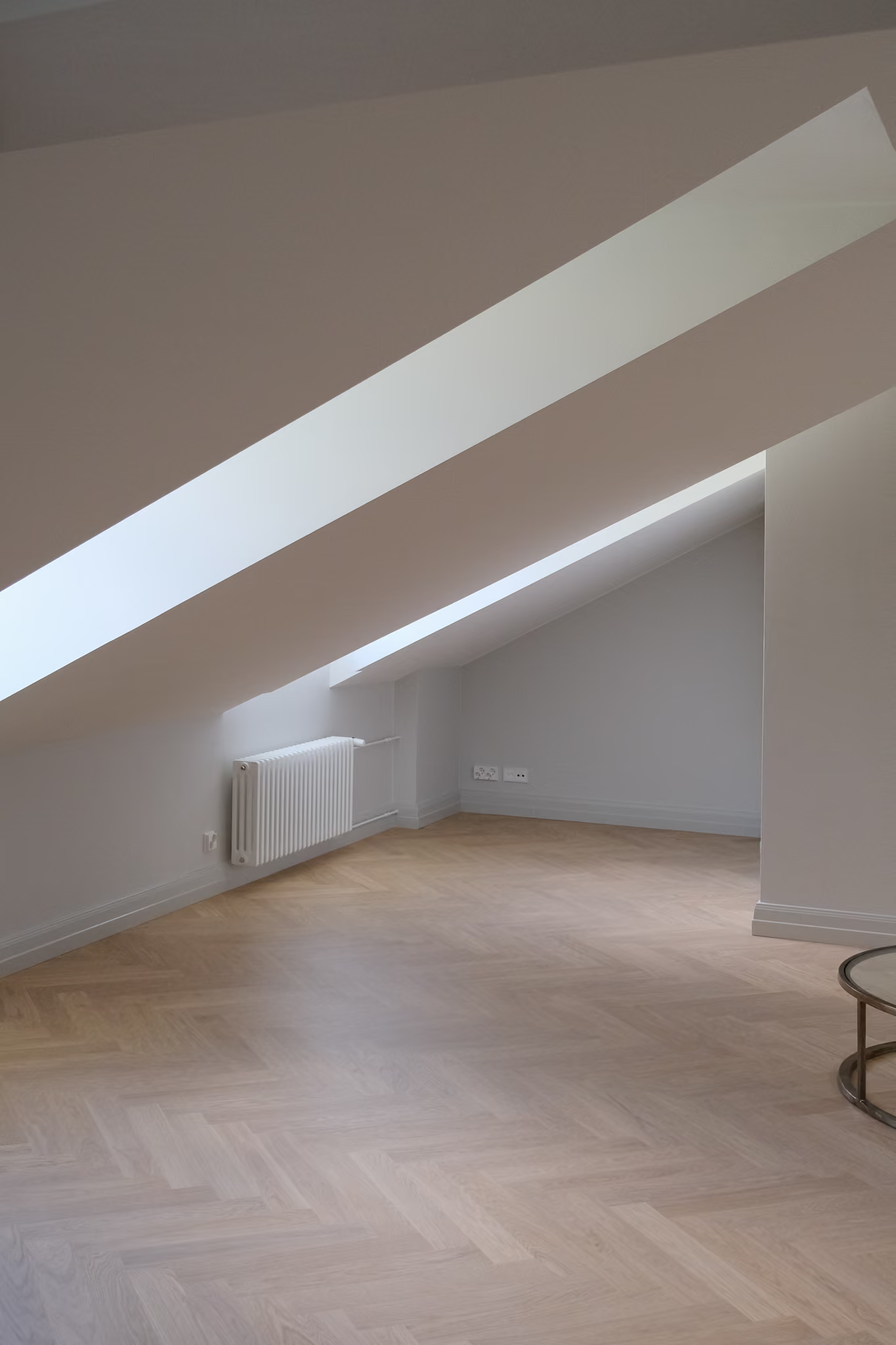
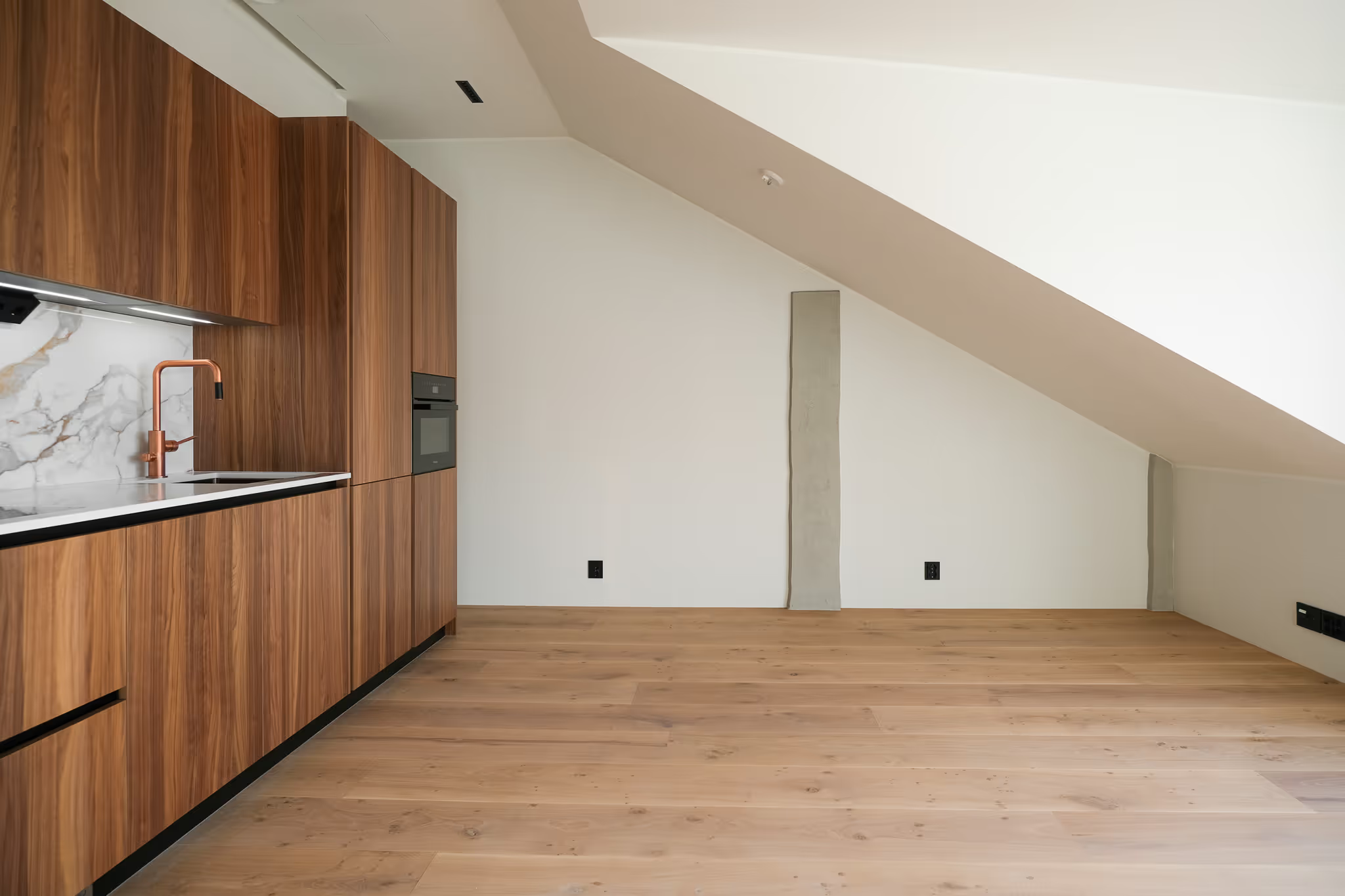
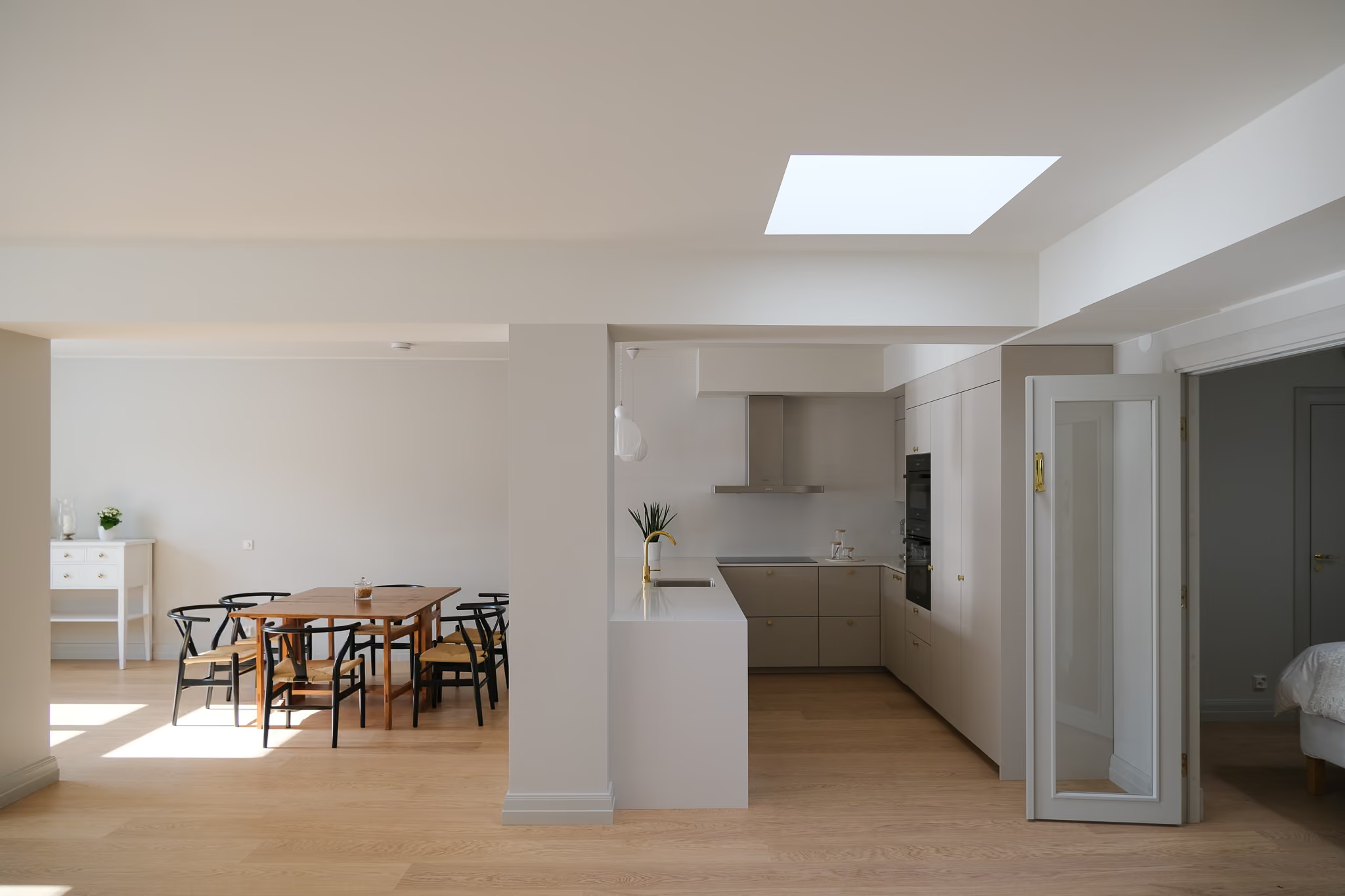
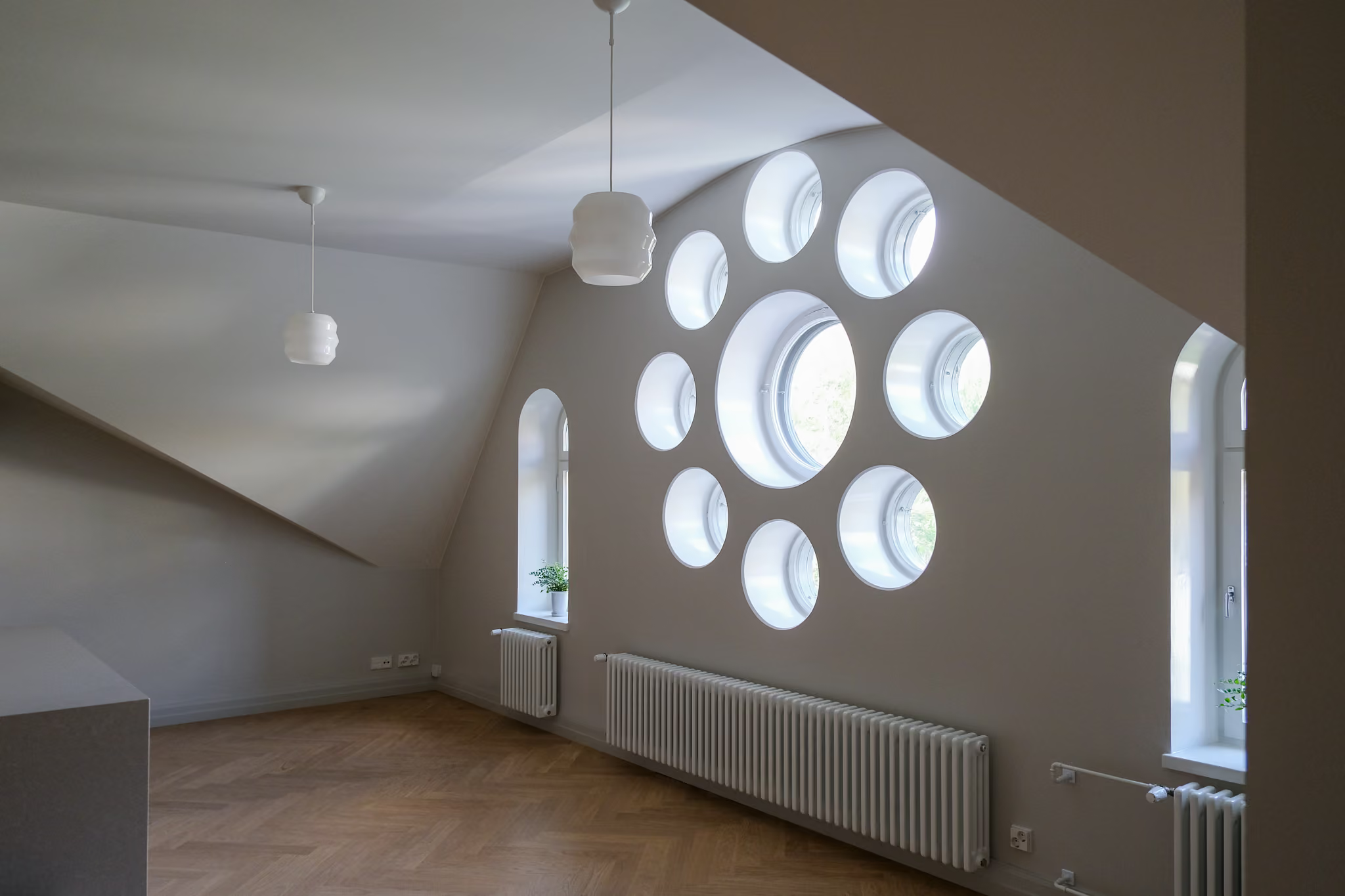
The new apartments build on the timeless material palette successfully employed in the earlier conversion. A high level of quality is achieved through bespoke interior solutions, including custom-built entrance benches, integrated kitchen appliances, and recessed mirrored cabinets in the bathrooms. Each apartment is distinguished by its unique windows and views, ranging from French balconies and roof windows to an ornate rose window overlooking both Tähtitorninpuisto and the shared courtyard of Tähtitorninkatu 16.
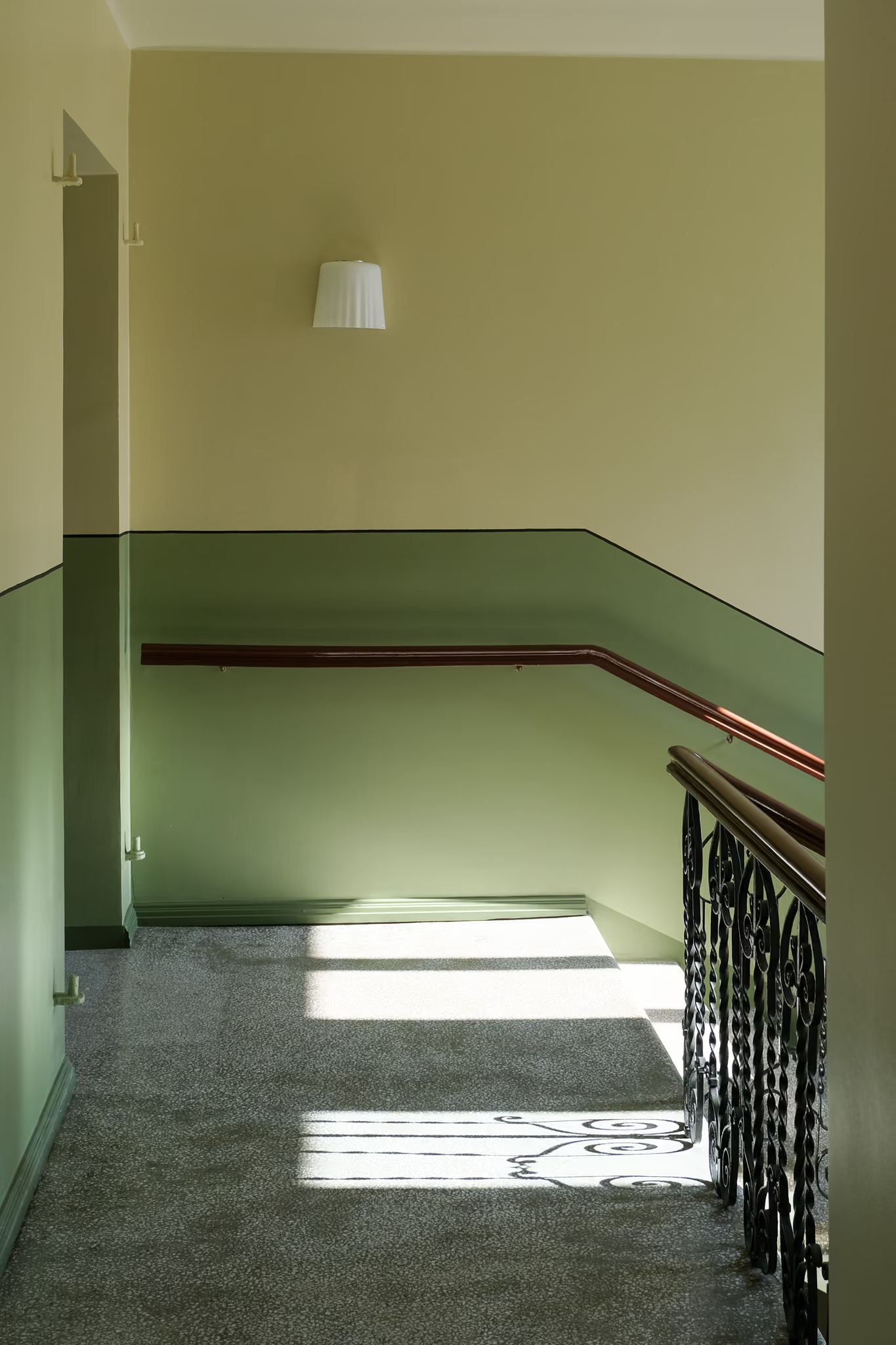
The apartments are accessed through the stairwell of Tähtitorninkatu 16, which had been restored in a previous phase. New extensions were carefully integrated into the historic structure. The restored stairwell of Tähtitorninkatu 18 continues to serve visitors of the church. A colour study of the stairwell guided the restoration process and the selection of finishes. The final colour scheme was developed in collaboration with the Helsinki City Museum and was based on the oldest surviving layer of paint discovered during the investigation.